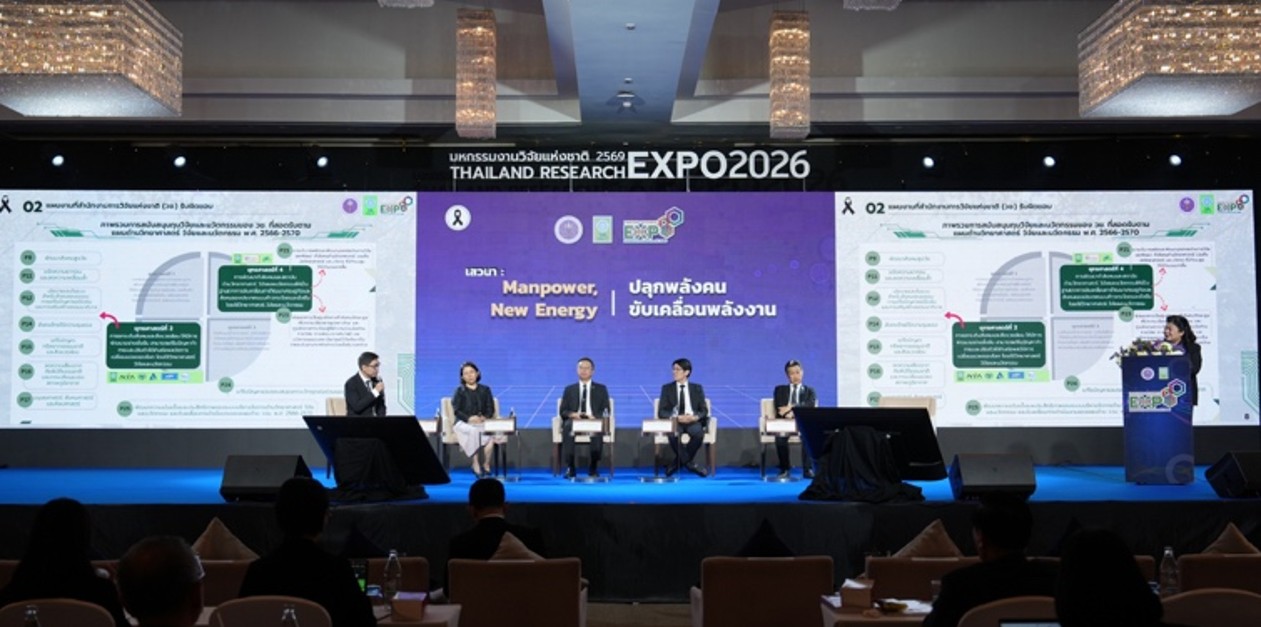
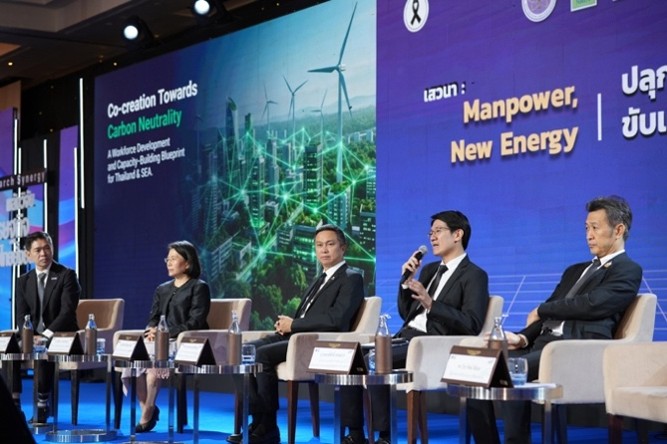
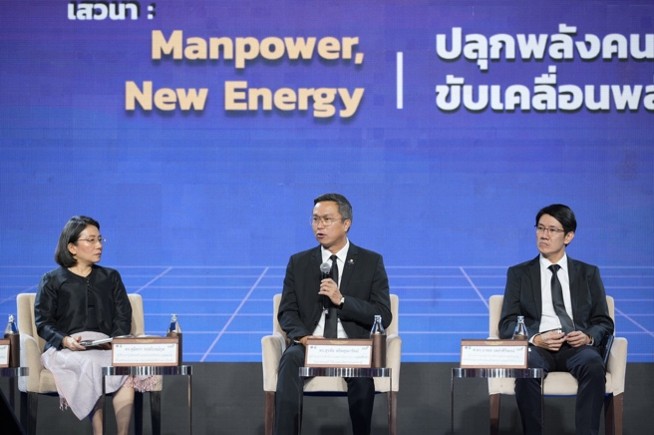
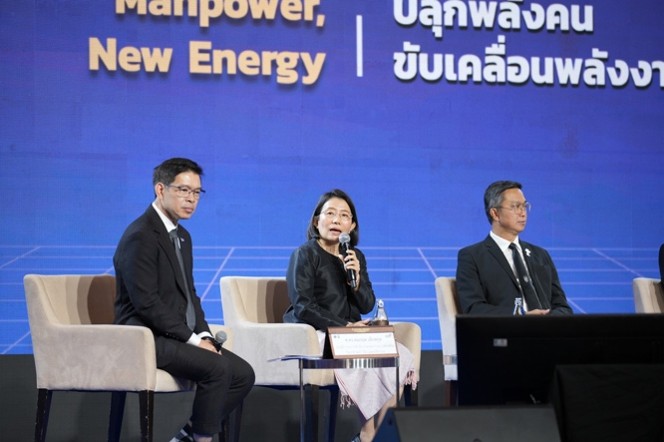
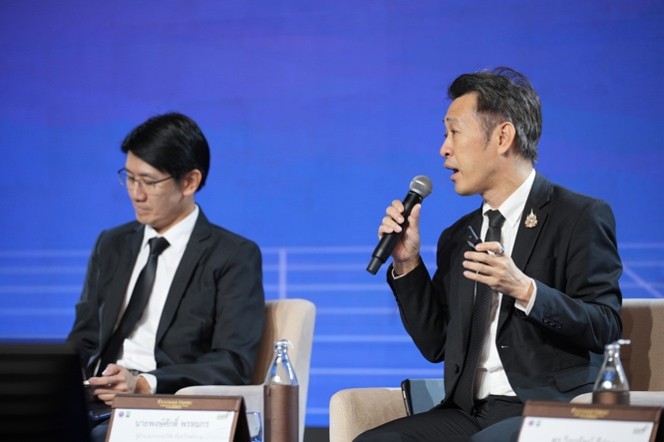
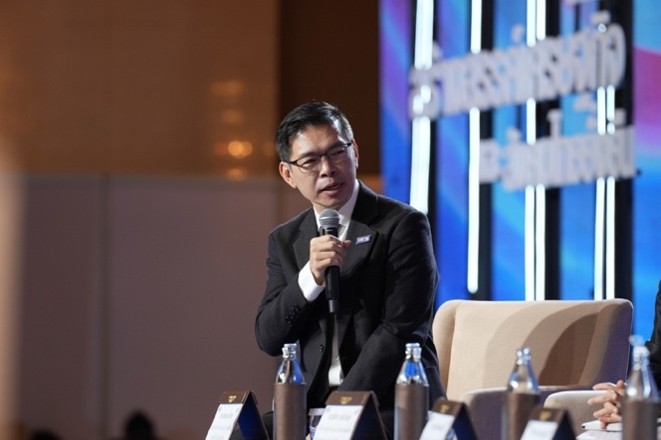
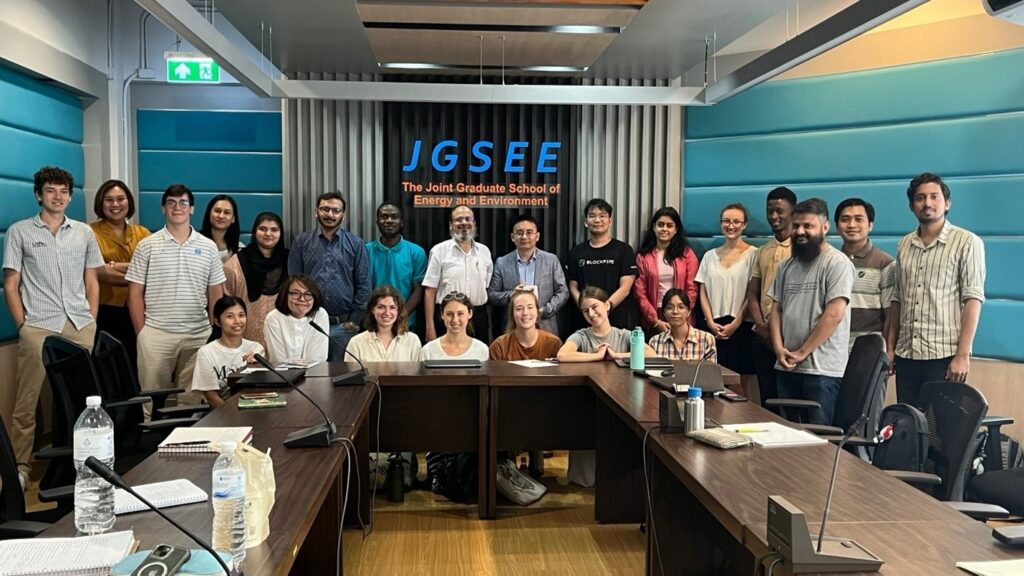
On 23 June 2026, Prof. Dr. Navadol Laosiripojana, Director of the Joint Graduate School of Sustainable Energy and Environment (JGSEE), King Mongkut’s University of Technology Thonburi (KMUTT), and Manager of Hub Net Zero, participated in the conference “Manpower, New Energy: Empowering People to Drive the Energy Transition,” held as part of the Thailand Research Expo & Symposium 2026. The event was organized by the National Research Council of Thailand (NRCT) and took place from 22–26 June 2026 at the Centara Grand & Bangkok Convention Centre at CentralWorld.
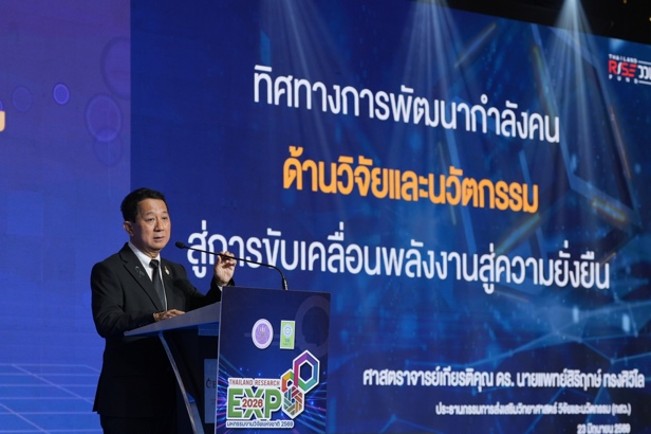
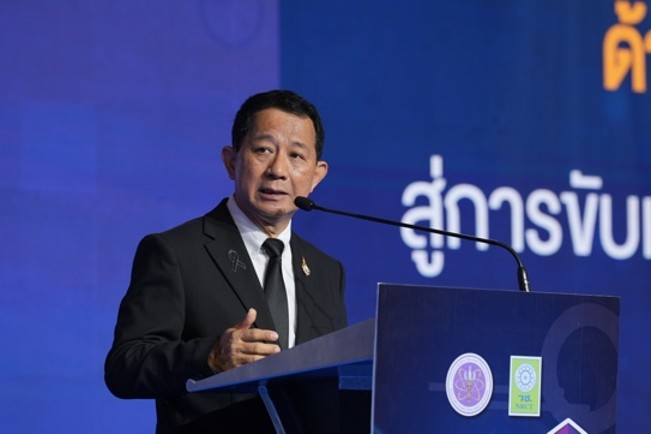
The programme opened with a keynote address on “Directions for Research and Innovation Talent Development to Drive Sustainable Energy” by Prof. Dr. Sirirurg Songsivilai, Chairman of the National Commission on Science, Research and Innovation.
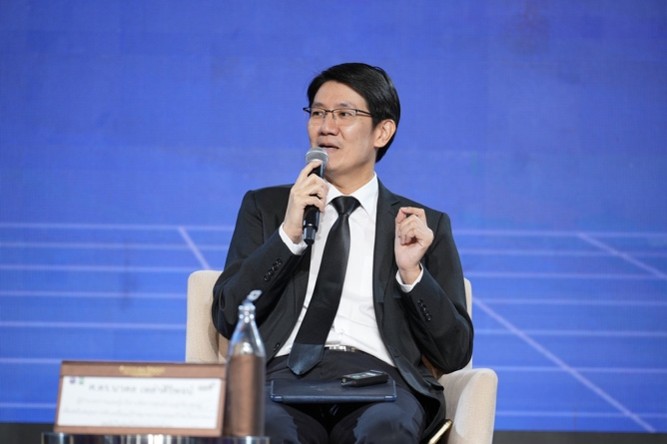
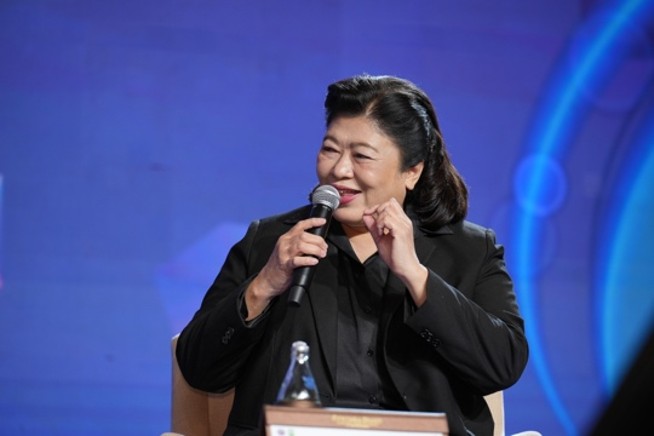
Prof. Navadol joined a distinguished panel comprising Dr. Surachai Sathitkunarat, President of the Office of the National Higher Education, Science, Research and Innovation Policy Council (NXPO); Dr. Wiparat Dee-ong, Executive Director of NRCT; Dr. Sumittra Charojrochkul, expert in clean energy, future fuels, and electric vehicle technologies; and Mr. Pongsak Prommakorn, Director of the Energy Research Division at the Department of Alternative Energy Development and Efficiency. The session was moderated by Prof. Dr. Komgrit Leksakul, Vice President of Thailand Science Research and Innovation (TSRI).
In his presentation, “Co-creation Towards Carbon Neutrality: A Workforce Development and Capacity-Building Blueprint for Thailand and Southeast Asia,” Prof. Navadol highlighted that Thailand’s low-carbon transition rests on four pillars: economic instruments such as carbon pricing and carbon markets; power sector decarbonization through renewable energy expansion and grid modernization; end-use electrification, including electric vehicles and advanced energy technologies; and the advancement of the Bio-Circular-Green (BCG) Economy.
He further noted that achieving carbon neutrality requires the development of integrated technological ecosystems, bringing together Small Modular Reactors (SMRs), green hydrogen, and advanced biorefineries. These technologies collectively support clean power generation, decarbonization of hard-to-abate sectors, and the production of low-carbon fuels, including Sustainable Aviation Fuel (SAF).
Prof. Navadol also emphasized that the most critical challenges in the transition is the shortage of skilled human capital across six priority areas: transformative power systems and non-bio renewable energy; energy efficiency; air quality and climate change; circular economy and sustainability; transition policy and management; and sustainable bioenergy and biorefinery. To address this gap, he presented a comprehensive workforce development ecosystem comprising seven pillars: graduate education; professional upskilling and reskilling; entrepreneurship development; collaborative research and innovation; international partnerships; industrial and government collaboration; and train-the-trainer programmes to strengthen long-term institutional capacity.
The session underscored the central role of human capital in enabling Thailand’s energy transition, highlighting that coordinated investment in education, innovation, and cross-sector collaboration is essential to accelerate progress toward a carbon-neutral future.