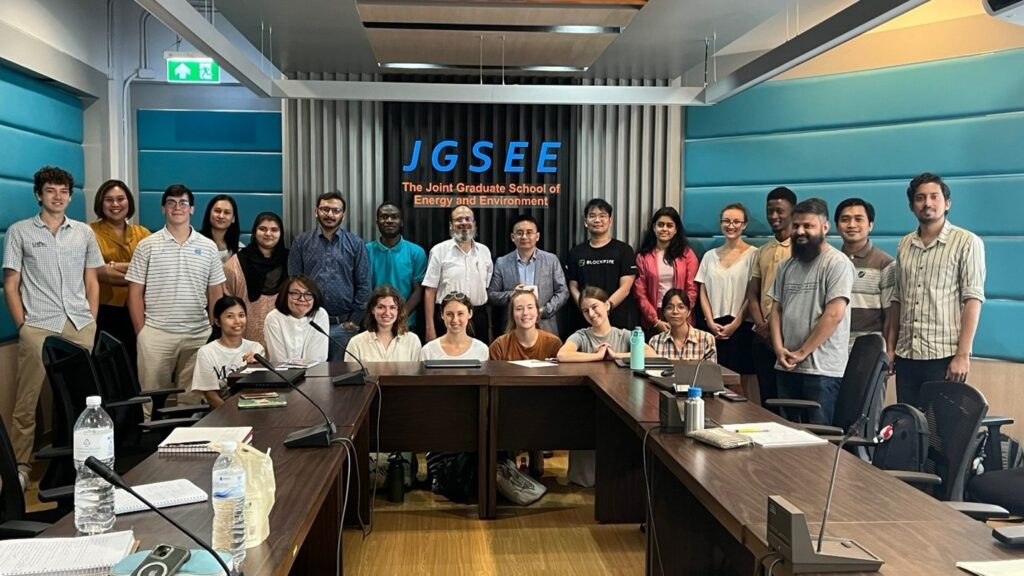
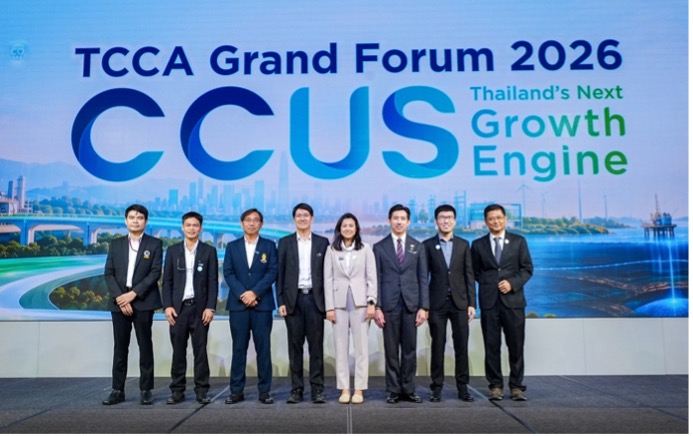
On 5 November 2026, Prof. Dr. Navadol Laosiripojana, Director of the Joint Graduate School of Energy and Environment at King Mongkut’s University of Technology Thonburi (JGSEE-KMUTT) and Manager of Hub Net Zero, participated in the TCCA Grand Forum 2026, held at Grande Centre Point Prestige Bangkok. Themed “CCUS: Thailand’s Next Growth Engine,” the event was hosted by the Thailand CCUS Alliance (TCCA), which operates under the National Nanotechnology Center (NANOTEC), National Science and Technology Development Agency (NSTDA).
The TCCA Grand Forum 2026 provided a platform for exchanging policy, industrial, and research perspectives on advancing carbon capture, utilization, and storage (CCUS) in Thailand. The program featured a keynote address by Prof. Dr. Yodchanan Wongsawat, Deputy Prime Minister and Minister of Higher Education, Science, Research and Innovation (MHESI), on “CCUS: New Growth Engine for Thailand’s Net Zero Future,” alongside discussions on Thailand’s CCUS policy, legal framework, and industrial development plans.
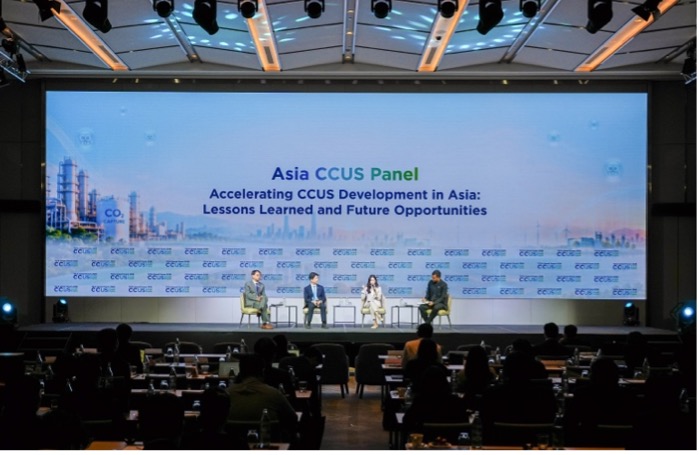
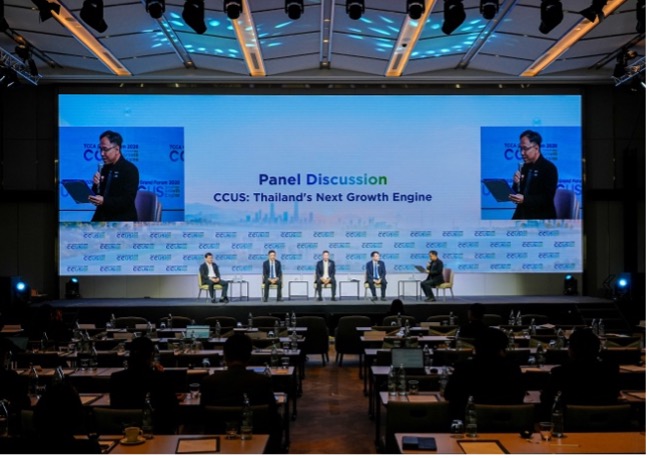
The forum also brought together international experts from China, the Republic of Korea, and Indonesia to share regional experiences and explore future opportunities. Industry representatives from the Thai Cement Manufacturers Association (TCMA), Sahaviriya Steel, the Electricity Generating Authority of Thailand (EGAT), and PTT Exploration and Production (PTTEP) also shared perspectives on industrial CCUS development. A CCUS Innovation Showcase further highlighted emerging research and technological solutions.
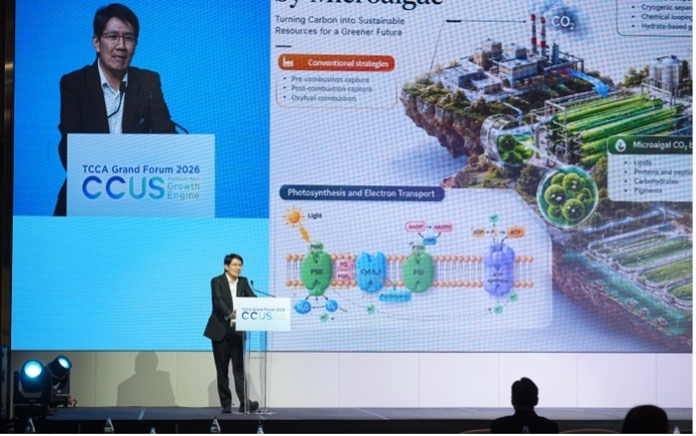
Prof. Navadol delivered a presentation in the session “Thailand’s CCUS Research Potential,” which highlighted Thailand’s research capabilities, technological advancements, and innovations in CCUS. The session also aimed to promote knowledge exchange and collaboration among research institutions, industry, and government agencies, fostering the further development and practical application of research outcomes in industry.
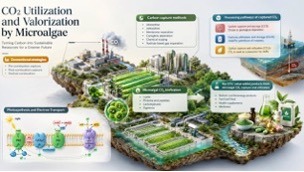
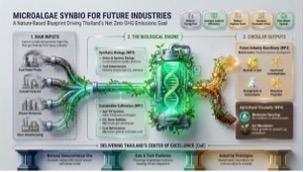
His presentation highlighted an ongoing collaborative research project involving multiple universities and research institutes to develop microalgae-based carbon capture technologies for commercial applications, using CO2 from industrial emissions. The project offers a nature-based approach to supporting Thailand’s goal of achieving net-zero greenhouse gas (GHG) emissions through four interconnected components:
- Synthetic Biology: Applying synthetic biology to enhance microalgae characteristics, including their tolerance to extreme temperatures and high CO2
- Sustainable Cultivation: Integrating agrivoltaics (Agri-PV) with CO2 nanobubble technology to improve the sustainability and efficiency of microalgae cultivation.
- Future Industry Biorefinery: Applying bioinformatics to explore the potential of microalgae as sources of high-value products, including biofuels, sustainable aviation fuel (SAF), functional carbohydrates, biopigments, antioxidants, and bioactive peptides.
- Agricultural Circularity: Upcycling wastewater to produce biofertilizers and biostimulants, while promoting resource recovery and reuse through a closed-loop system.
Photo credit: TCCA