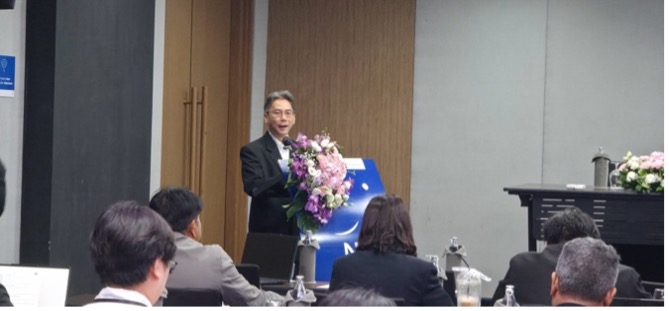
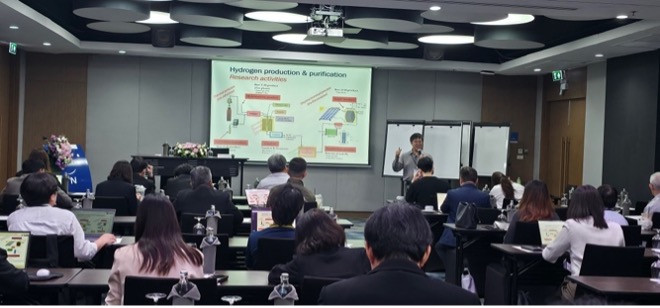
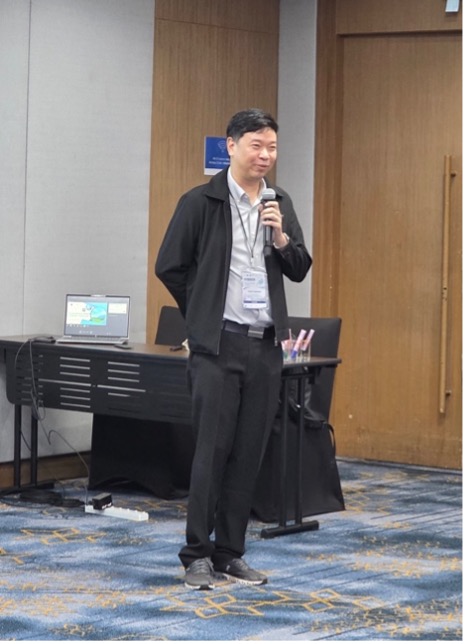
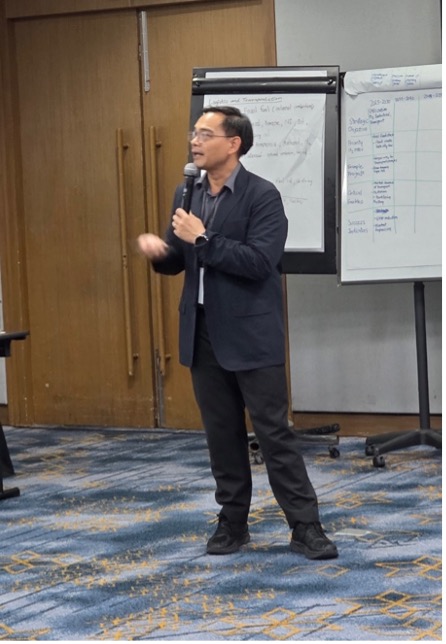
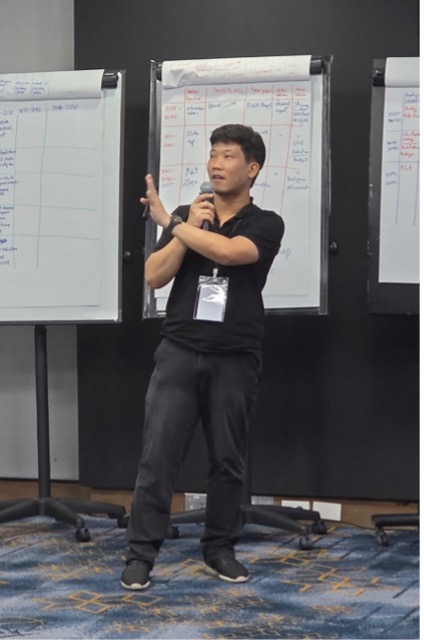
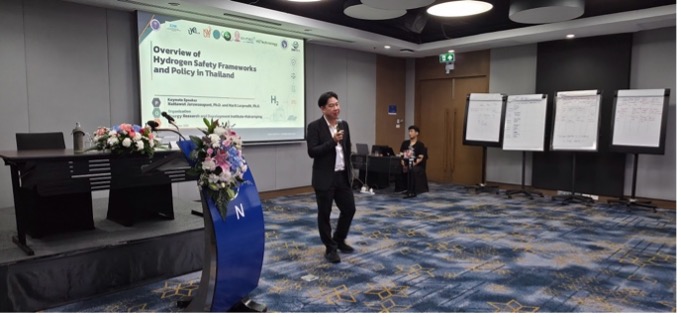
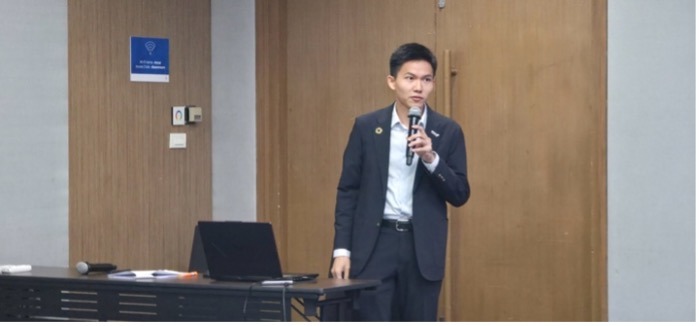
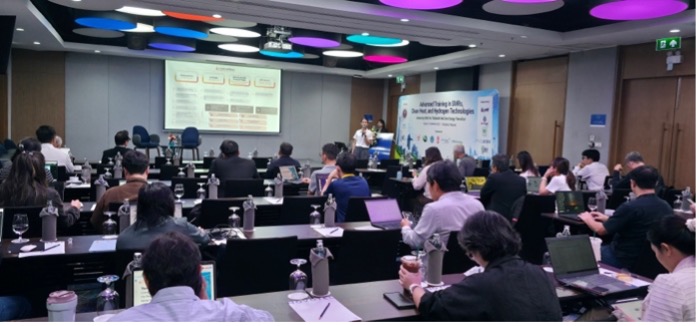
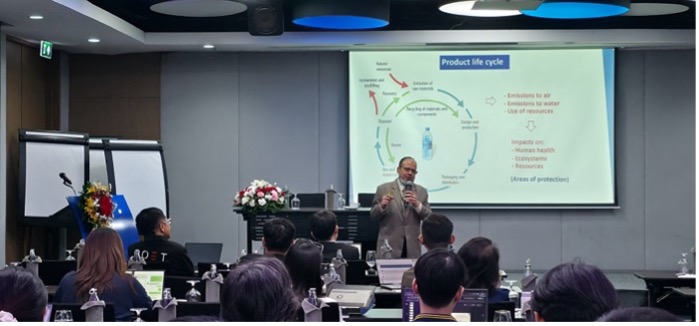
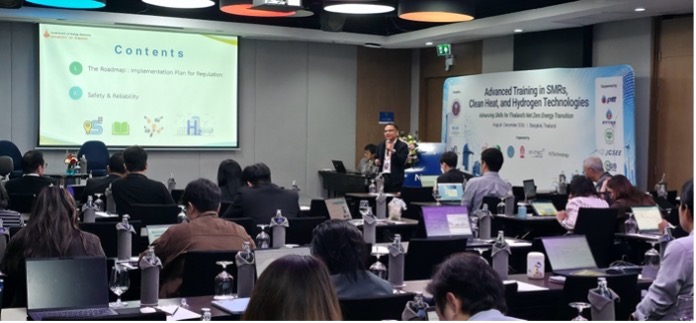
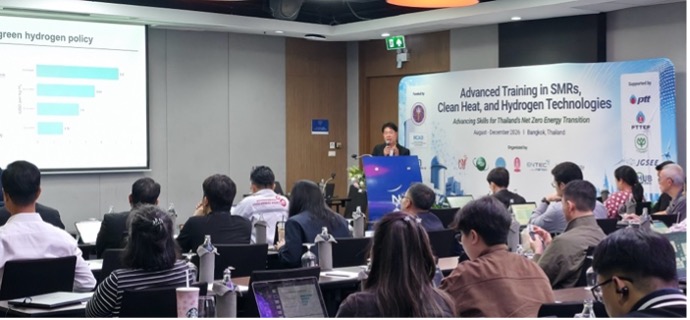
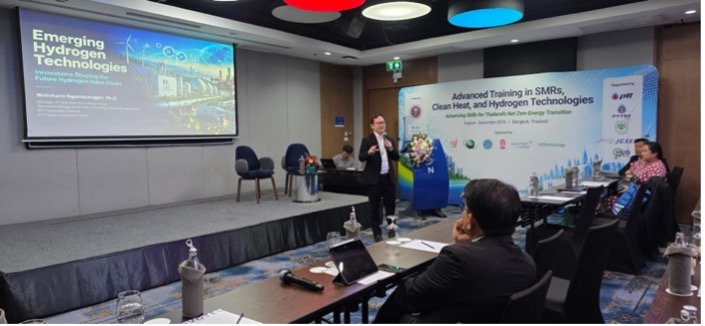
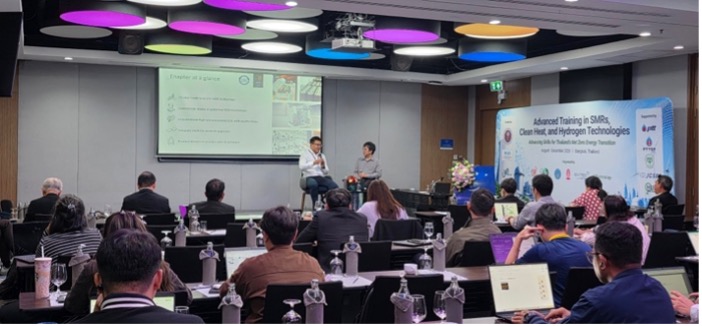
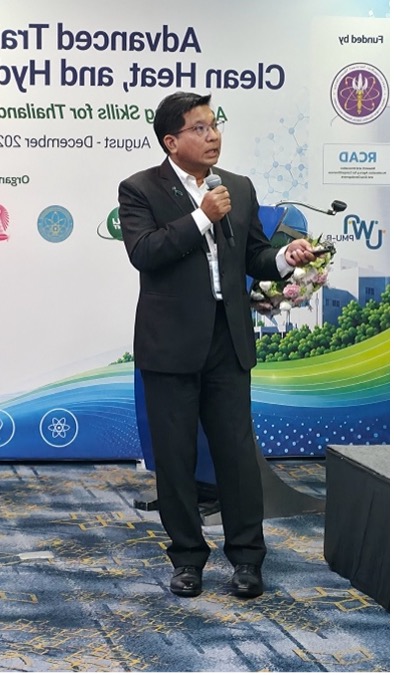
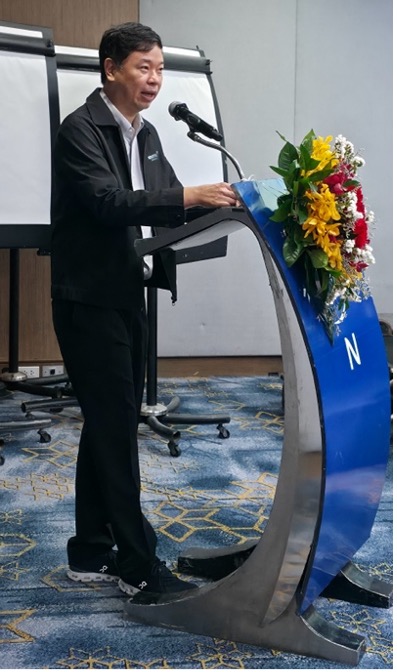
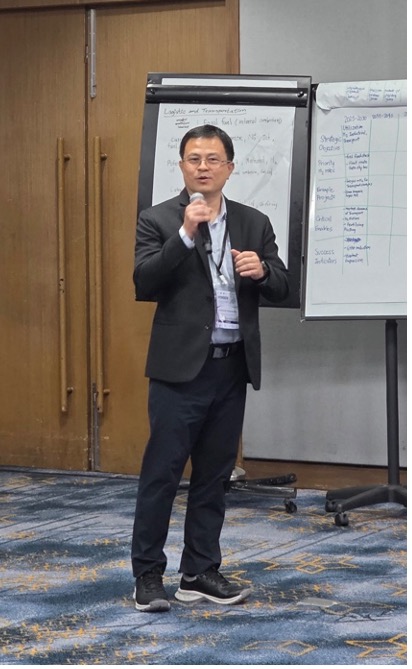
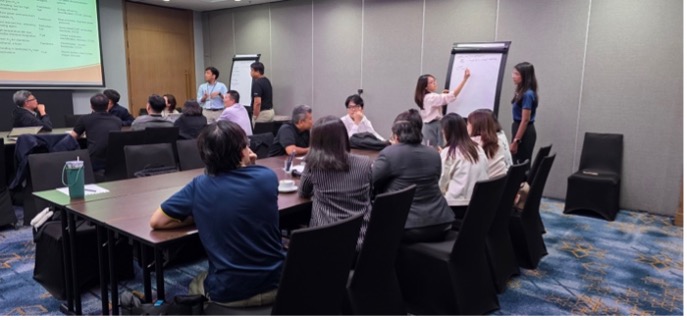
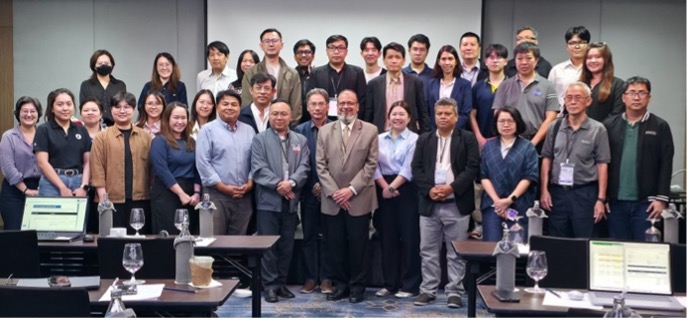
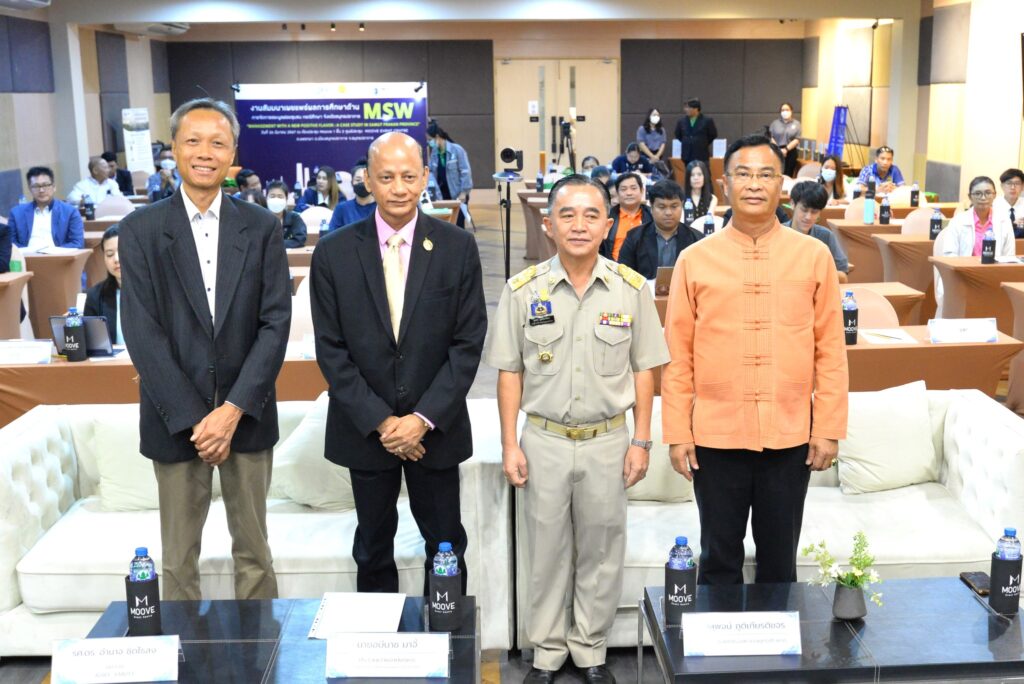
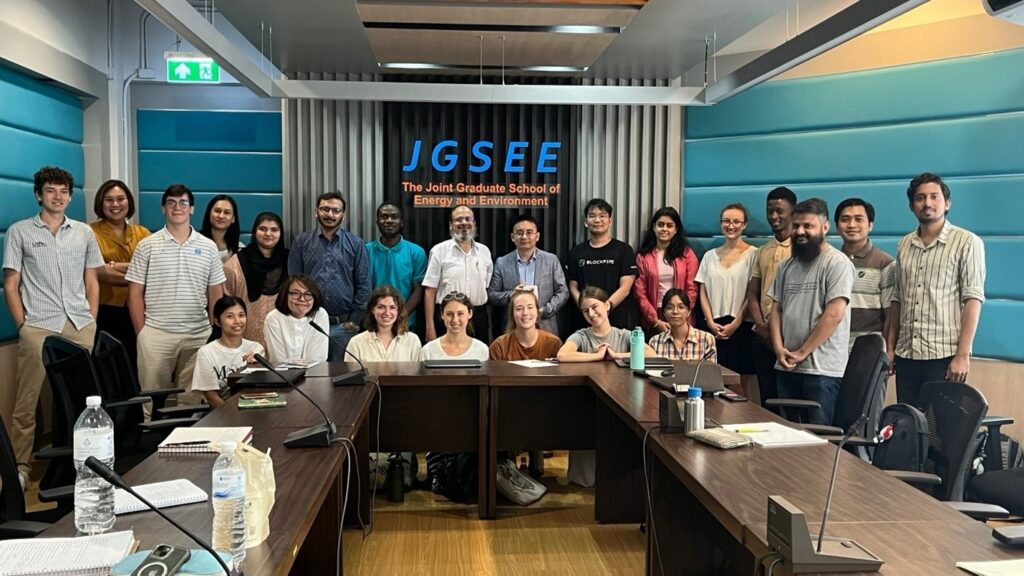
The Hydrogen Technology Training Course, part of the Energy Transition Workforce Skills Program, was successfully completed following six days of training held from 3–17 September 2026. The course was designed to strengthen participants’ skills essential for the deployment of hydrogen technologies in Thailand.
The Energy Transition Workforce Skills Program aims to strengthen Thailand’s workforce capabilities in small modular reactors (SMRs), clean heat, and hydrogen technologies. The program is implemented by a multi-institutional consortium led by King Mongkut’s University of Technology Thonburi (KMUTT), with other consortium members including the Office of Atoms for Peace (OAP), the Thailand Institute of Nuclear Technology (TINT), Chulalongkorn University’s Department of Nuclear Engineering, the National Energy Technology Center (ENTEC), and H2Technology LLC (USA). Assoc. Prof. Dr. Pipat Chaiwiwatworakul of JGSEE serves as the project leader. The program is funded by the Program Management Unit for Frontier Brainpower and Future Industries (PMU-B) under the Office of Research and Innovation Acceleration for Competitiveness and Area Development (Public Organization) (RCAD).
The training covered five key areas:
Module 1: Hydrogen System Engineering Covered hydrogen production, storage, and transportation technologies. Participants applied their knowledge to a case study on developing a hydrogen value chain for a Thai industrial hub.
Module 2: Energy System Integration Explored hydrogen applications in industry, power generation, and transportation. Participants also examined carbon standards and certification and identified potential roles for hydrogen in Thailand’s industrial decarbonization.
Module 3: Hydrogen Safety and Regulation Addressed hydrogen safety and regulation in Thailand, hazard and risk assessment, and international standards. Participants applied risk-assessment approaches to a hydrogen refueling station scenario.
Module 4: Economics of Hydrogen Introduced the levelized cost of hydrogen (LCOH), financial modeling, business models, financing mechanisms, and life cycle assessment (LCA), equipping participants to assess the economic and environmental feasibility of hydrogen projects.
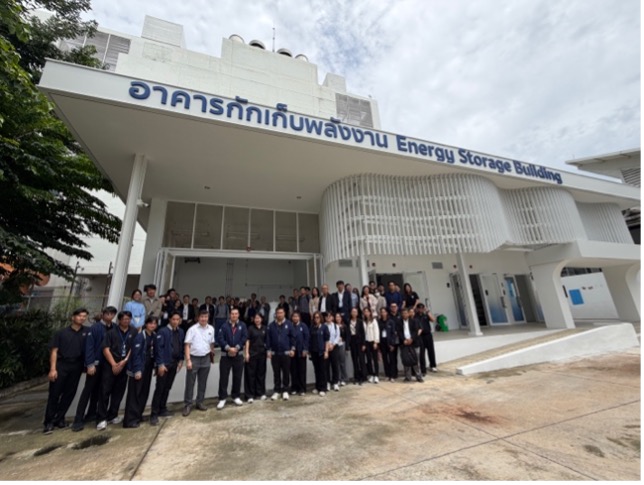
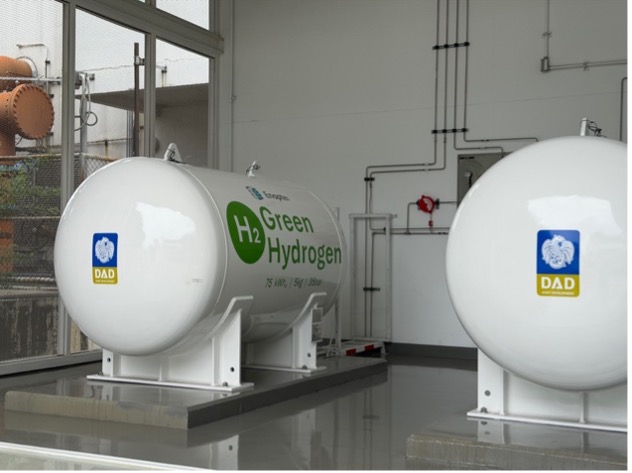
Module 5: Policy and Market Development Examined Thailand’s hydrogen roadmap and international policy developments, alongside investment conditions, industrial perspectives, and emerging technologies. The program concluded with an eye-opening technical visit to the Government Office Complex’s hydrogen production and storage demonstration facility – a flagship regional showcase for green energy integration.
The instructor team brought together experts from academia, government, industry, and the energy sector, including
Prof. Dr. Nutthapon Wongyao, KMUTT
Visarn Lilavivat, National Energy Technology Center (ENTEC)
Uthen Kanta, Chiang Mai University
Prof. Dr. Pornchai Wisuttisak, Chiang Mai University
Prof. Dr. Konlayutt Punyawudho, Chiang Mai University
Natee Sittiwech, Bangkok Industrial Gas Company Limited (BIG)
Dr. Shabbir H. Gheewala, KMUTT
Suphatchaya Chonchanachai, Energy Policy and Planning Office (EPPO)
Sermpong Suwanna, Department of Energy Business (DOEB)
Neran Suwanchotchuang, Hydrogen Thailand Association
Narit Lorpradit, ERDI, Chiang Mai University (CMU)
Tanai Potisat, Enapter Thailand/Germany/Italy
Dr. Watcharin Ngampuengpis, PTT Public Company Limited
The Hydrogen Technology Training Course contributes to Thailand’s efforts to develop the skilled workforce needed to support a secure and low-carbon energy future. Together with training in small modular reactors (SMRs) and clean heat, the Energy Transition Workforce Skills Program supports the development of national capabilities in key technologies underpinning Thailand’s long-term energy transition.