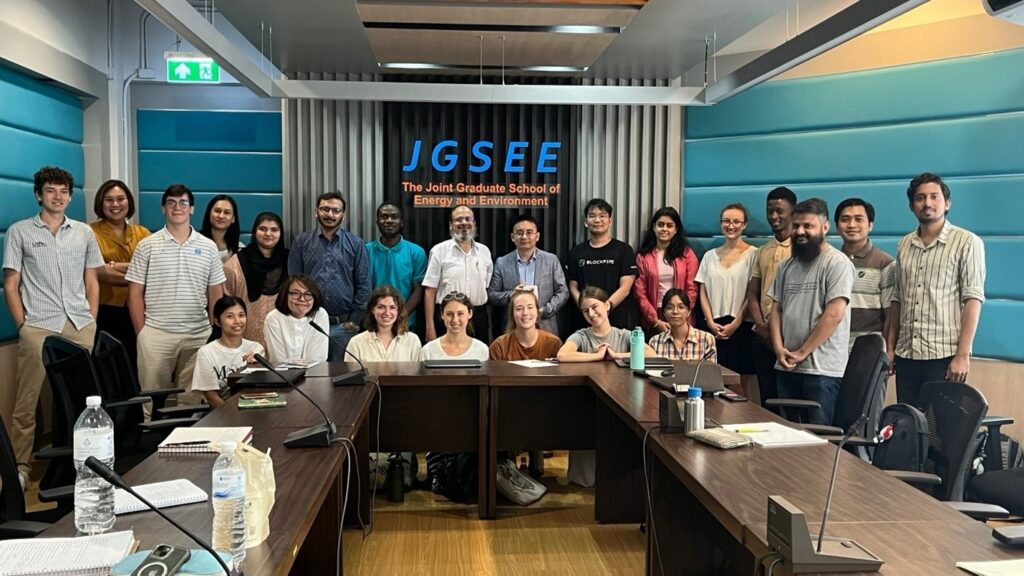

On 8 September 2026, researchers from the Joint Graduate School of Energy and Environment (JGSEE-KMUTT), the Pilot Plant Development and Training Institute (PDTI-KMUTT), and the National Center for Genetic Engineering and Biotechnology (BIOTEC-NSTDA) visited Sahaviriya Steel Industries Public Company Limited (SSI) in Prachuap Khiri Khan Province to explore collaboration on advancing algae-based carbon capture technology for industrial applications.

The visit was conducted under the research project “Innovative Development of Microalgal Strains through Synthetic Biology for Enhanced Carbon Dioxide Capture and High-Value Compound Production, with Strategic Industrial Applications to Mitigate Greenhouse Gas Emissions in Thailand.” The project aims to develop algae-based carbon capture technologies for commercial applications by using synthetic biology to engineer microalgal strains with enhanced carbon dioxide (CO2) utilization and tolerance to heat and high CO2 concentrations, developing sustainable cultivation systems integrating photovoltaic-powered photobioreactors within an agrivoltaic (AgriPV) framework and CO2 nanobubble technology, and producing high-value bioproducts.
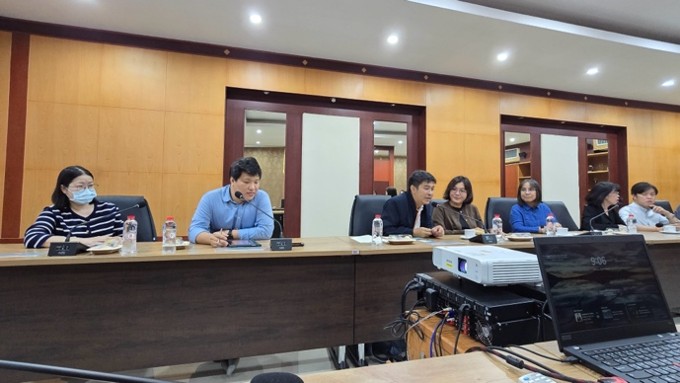
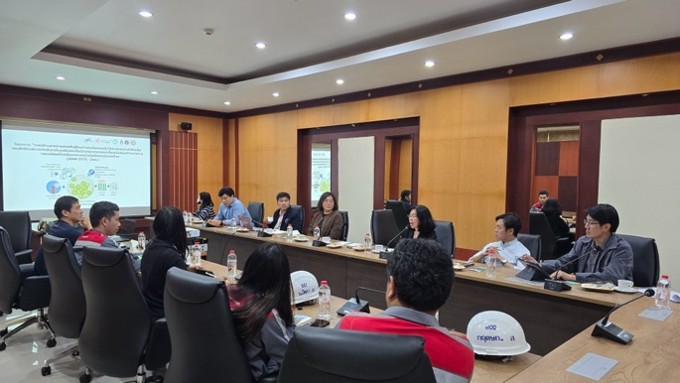
The research team, led by Prof. Dr. Navadol Laosiripojana, Director of JGSEE, was welcomed by Mr. Somsak Pikkanesuan, Vice President and Head of Group Energy and Environment Technology Office, together with representatives from SSI. The team toured the company’s steel production facilities and biotechnology and energy laboratory.
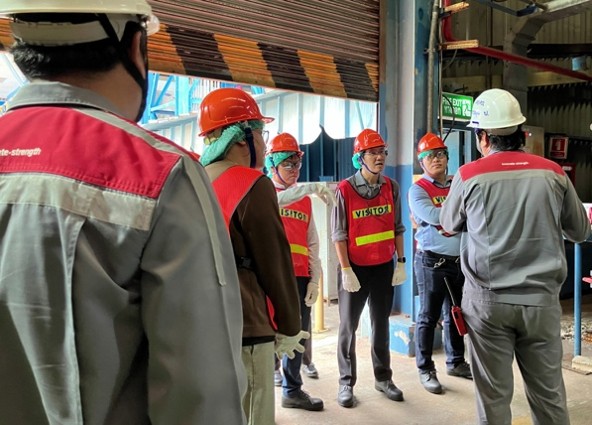
A key part of the visit was a survey of the site for installing a reactor at SSI. The reactor will be used to test a CO2 capture system in which the newly developed microalgal strains utilize CO2 from actual industrial emissions as a source of carbon for growth. This will enable the research team to assess how effectively the microalgae can capture and utilize CO2 under real industrial conditions, providing an important step toward validating the technology’s performance and advancing it toward commercial applications.
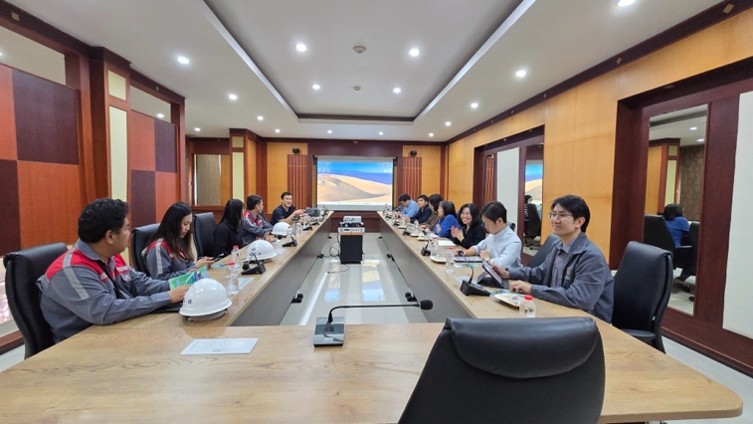
Following the site visit, representatives from both sides held a meeting to discuss the next phase of collaboration, including plans to advance carbon capture and utilization (CCU) technology from laboratory research toward practical application in heavy industry. The collaboration will help bridge research and industrial deployment while supporting Thailand’s transition toward a low-carbon economy and its net-zero goal.